Flagship project

The Coffee Initiative

A regional climate and social vulnerability assessment of the Latin American and Caribbean coffee sector — the first large-scale application of the SNPI framework, spanning five country case studies.

The initiative integrates satellite and environmental data with social network analysis across five country-level case studies. It is the first large-scale application of the SNPI framework, and the first assessment that treats social and environmental vulnerability as co-equal dimensions in the LAC coffee sector.

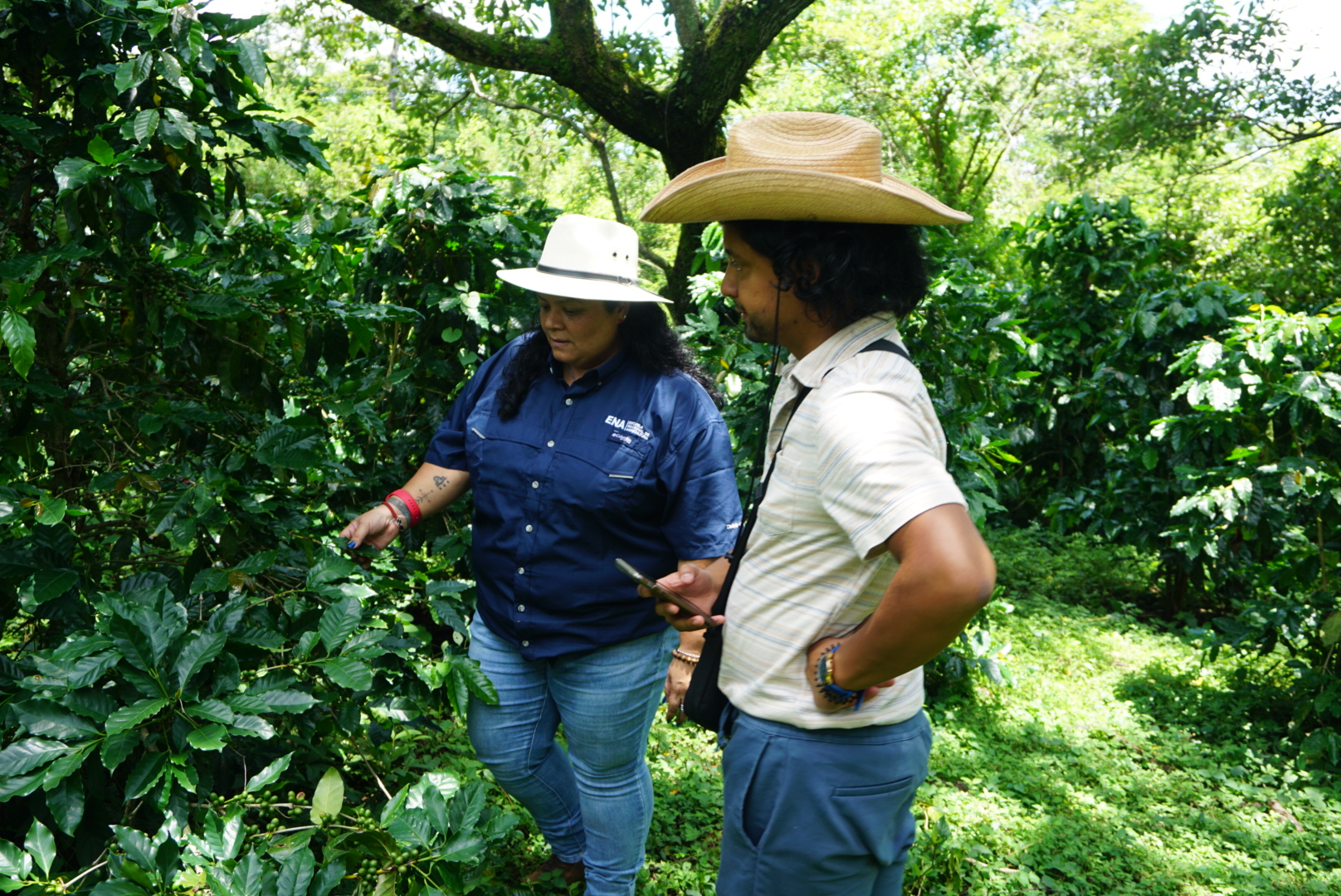
Close-up of ripening coffee cherries on a shaded coffee plant.

Regional reach, country-level depth


Regional reach, country-level depth

Hover over a country to preview, or click to jump to its case-study card below.

Mexico Colombia Costa Rica El Salvador Guatemala N

Five country case studies


Each country on its own terms

Colombia

  • World's third-largest Arabica producer
  • Key regions: Huila, Nariño, Antioquia
  • Threats: temperature increase at altitude, shifting precipitation, leaf rust
Request a country briefing

Costa Rica

  • Pioneering sustainability certifications
  • Key regions: Tarrazú, West Valley, Central Valley
  • Threats: reduced rainfall, rising temperatures at lower altitudes
Request a country briefing

El Salvador

  • Dialectik pilot country · 2024 transdisciplinary study
  • Key regions: Apaneca-Ilamatepec, El Bálsamo
  • Lost 60% of coffee production (2012–13) to leaf rust + social-institutional collapse
  • Threats: drought, flooding, pest pressure, economic vulnerability
Request a country briefing

Guatemala

  • Diverse microclimates across eight distinct regions
  • Key regions: Antigua, Huehuetenango, Atitlán
  • Threats: extreme weather events, water scarcity, highland vulnerability
Request a country briefing

Mexico

  • One of the world's largest organic coffee producers
  • Key regions: Chiapas, Veracruz, Oaxaca
  • Threats: leaf rust epidemics, temperature shifts, smallholder vulnerability
Request a country briefing

The LAC–EU trade context


A €28.8B market in the middle of a regulatory transformation

Europe is the world's largest coffee market and does not grow a bean of its own. Every cup consumed is imported — and the rules governing that import are changing faster than at any point in the EU's trade history. LAC producers supply over 60% of the world's coffee and 80% of global Arabica; what the EU decides about sustainability, traceability, and carbon accounting lands directly on Latin American farms.

€28.8BEuropean coffee imports (2024)
60%+Global coffee originating in LAC
Up to 50%Arabica land loss projected by 2050
14M+Jobs in the LAC coffee sector

Four regulatory shifts shaping the next decade

EUDR — Deforestation Regulation

Every coffee shipment entering the EU must be verified deforestation-free, traceable to the exact plot of land where it was grown, and accompanied by geolocation data. Enforcement: 30 December 2026 (large and medium operators) · 30 June 2027 (micro and small enterprises). Non-compliance: fines up to 4% of EU turnover.

CBAM — Carbon Border Adjustment

CBAM does not yet cover coffee directly but affects it indirectly through nitrogen fertilisers, on which LAC coffee production heavily depends. Its definitive phase began 1 January 2026. Future scope expansion is under review for 2027–2028.

EU–Mercosur Partnership

Signed January 2026 after 25 years of negotiation; provisional application from May 2026. The agreement explicitly requires all products entering the EU to be deforestation-free under the EUDR. A January 2026 Parliament referral to the Court of Justice creates up to two years of regulatory uncertainty, particularly for Brazilian exports.

EU–Central America Association

In force since 2013. Coffee from Honduras, Nicaragua, Panama, Costa Rica, El Salvador, and Guatemala enters the EU duty-free. The 2025 extension added 11 new Geographical Indications from Central America, several coffee-related.

Download the full LAC–EU Intelligence Brief

Infrastructure for impact


We strengthen the work of implementing organizations

We produce research and intelligence that strengthens the work of organizations like TechnoServe, Solidaridad, and national coffee institutes. We are not competing with implementing organizations — we are providing the evidence base they need, so that their programs can be targeted more effectively and their results more robustly evaluated.